
business blogging
Uncategorized

Should Your Website Have a Blog? Here’s the Case For It

More Than Just a Website Feature business blogging Many businesses create a professional website, add their products or services, include an About page, and provide contact information. Then, they consider the website complete. However, a website can become much more powerful when it consistently provides useful and relevant information to its audience. This is where a blog becomes valuable. A blog gives your website the opportunity to grow continuously. Instead of remaining a collection of static pages, your website can regularly publish new ideas, industry insights, solutions, and helpful information. Consequently, a well-managed blog can support your digital marketing strategy, improve visibility, and create stronger connections with potential customers. Give Google More Reasons to Find You One of the strongest reasons to have a blog is search engine visibility. Search engines need valuable and relevant content to understand what your website offers. When you regularly publish useful articles around topics related to your business, you create more opportunities for your website to appear in search results. For example, a digital marketing website may have service pages for SEO, social media marketing, and Google Ads. However, a blog can target additional topics such as “How SEO Helps Small Businesses” or “Common Google Ads Mistakes.” Therefore, each blog post can become another potential entry point through which people discover your website. Turn Keywords Into Opportunities Keywords play an important role in helping the right audience find your content. A blog allows you to create focused content around questions, problems, and search terms that potential customers actively look for online. Instead of trying to place every keyword on a single service page, you can create individual articles around specific topics. Moreover, blogging allows you to target both broad and specific keywords. Broad keywords may attract a larger audience, while long-tail keywords can attract visitors with a clearer interest or intention. As a result, a consistent blogging strategy can help your website build a stronger and more diverse presence in search engines. Build Authority Before You Make the Sale People are more likely to trust businesses that demonstrate knowledge and expertise. A blog gives you a platform to explain your industry, answer important questions, and share valuable insights. Instead of simply telling visitors that you are an expert, you can demonstrate your expertise through useful content. For a digital marketer, this can include articles about SEO strategies, content marketing, social media trends, website optimization, and advertising techniques. Over time, visitors begin to recognize the value of your knowledge. Consequently, your blog can help establish your personal brand or business as a trusted source of information. Answer Your Audience Before They Ask Every business receives questions from potential customers. Some people want to understand the process, while others want to know about pricing, benefits, timelines, or common challenges. A blog allows you to answer many of these questions before a visitor even contacts you. For example, if clients frequently ask whether SEO takes a long time to produce results, you can create a detailed article explaining the process. Similarly, if people want to understand the difference between organic marketing and paid advertising, a blog post can provide the answer. Therefore, your content works as an informative resource that supports your audience at every stage. Create Content That Keeps Working Social media posts often have a short lifespan. A post may receive attention for a few hours or days before it disappears from your audience’s feed. Blog content, however, can continue attracting visitors for months or even years when it remains relevant and useful. This makes blogging a long-term content investment. A high-quality article can continue generating organic traffic while you focus on other areas of your business. Furthermore, you can update older articles with new information, statistics, and strategies. As a result, your content can continue delivering value over time. Fuel Your Entire Content Marketing Strategy A single blog post can become the foundation for multiple pieces of content. For instance, you can transform key points from an article into Instagram posts, LinkedIn content, short-form videos, email newsletters, carousels, and infographics. Therefore, blogging can make content creation more efficient. Instead of searching for completely new ideas for every platform, you can begin with one strong article and repurpose its insights into different formats. This approach helps you maintain consistency while saving valuable time and effort. Bring the Right People to Your Website Not every website visitor has the same purpose. Some visitors are ready to purchase, while others are still researching a problem. A blog helps attract people who are looking for information before they are ready to make a decision. By providing helpful content, you can introduce your brand to potential customers early in their journey. Then, through internal links, calls to action, and related services, you can guide interested readers toward the next step. Consequently, your blog can support the entire customer journey instead of focusing only on immediate sales. Strengthen Your Website’s Internal Structure A blog can also improve the structure of your website through internal linking. When you connect relevant blog posts to service pages and other useful resources, you make it easier for visitors to navigate your website. Additionally, internal links help search engines understand the relationship between different pages. For example, an article about content marketing can link to your content marketing service page. Similarly, an SEO article can connect readers to your SEO services. Therefore, a strategic internal linking structure can improve both user experience and website organization. Share Your Expertise and Unique Perspective Your website should represent more than your services. It should also communicate your perspective, experience, and understanding of your industry. A blog gives you the freedom to discuss topics that matter to your audience while presenting your unique approach. For example, two digital marketers may offer the same services, but their strategies, experiences, and opinions can be completely different. Through blogging, you can communicate what makes your approach unique. Consequently, your content can help differentiate you from competitors. A Blog Can Support Lead
Digital Marketing Hooks
Uncategorized

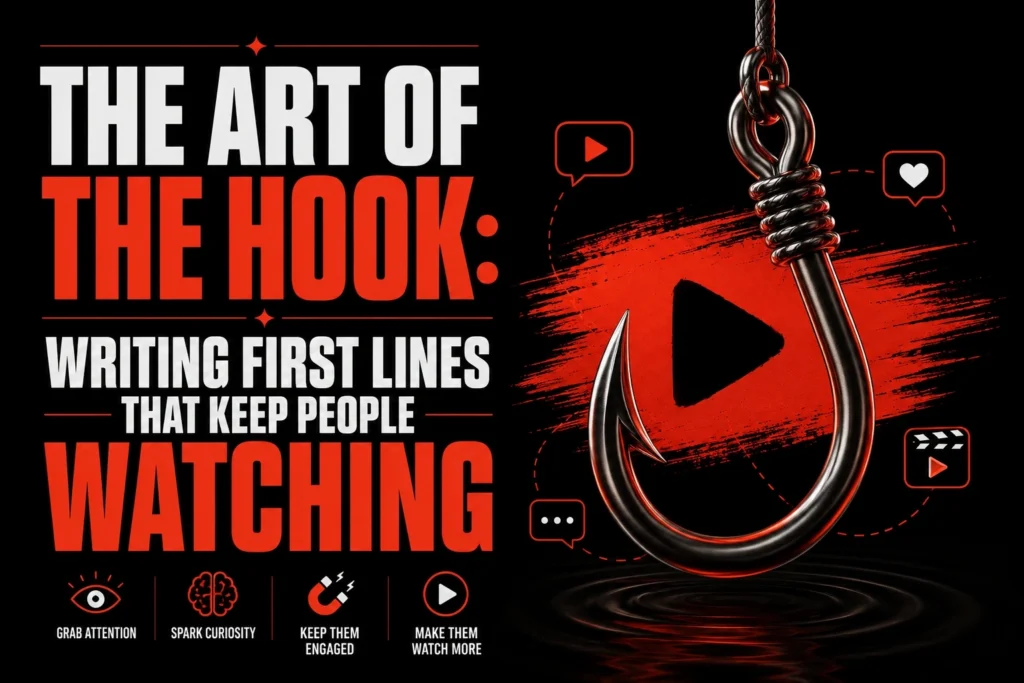
The Art of the Hook: Writing First Lines That Keep People Watching

The First Few Seconds Decide Everything In the fast-moving world of digital content, attention has become one of the most valuable resources. Every day, people scroll through hundreds of social media posts, videos, advertisements, and articles. Therefore, content creators and every digital marketer face one important challenge: how do you make someone stop and pay attention? The answer often begins with the hook. A strong first line creates curiosity, communicates value, and gives people a reason to continue watching or reading. Whether you create a video, write a blog post, or publish social media content, your opening can determine whether your audience stays or leaves. What Exactly Is a Hook? Digital Marketing Hooks A hook is the opening statement, question, visual, or idea designed to capture attention immediately. Its primary purpose is simple: encourage the audience to continue consuming your content. However, an effective hook does more than create surprise. It also creates a clear connection between the audience’s interests and your message. For example, instead of beginning a video with, “Today, we are going to discuss content marketing,” you could say, “Most businesses are wasting their best content without even realizing it.” The second opening immediately creates curiosity. Consequently, the audience naturally wants to discover what they might be doing wrong. Curiosity: The Engine Behind Every Great Hook Curiosity plays a major role in successful content. People naturally want answers when they encounter an interesting question, unexpected statement, or incomplete piece of information. Therefore, a well-written hook can create what marketers often call a “curiosity gap.” For instance, consider the opening: “This simple mistake is costing your website thousands of visitors.” The statement does not immediately reveal the mistake. Instead, it encourages the audience to continue watching to find the answer. Nevertheless, you should always deliver the promised information. Creating curiosity without providing value can damage audience trust. Start With a Problem Your Audience Recognizes One of the most effective ways to create a powerful hook is to address a problem your audience already experiences. People pay attention when content feels personally relevant. Therefore, understanding your target audience becomes essential before writing your first line. For a digital marketer, this might mean identifying common frustrations such as low engagement, poor website traffic, weak conversions, or difficulty creating consistent content. A hook such as “Posting every day but still getting no engagement?” immediately speaks to a specific problem. As a result, the right audience feels that the content was created specifically for them. The Power of Asking the Right Question Questions can create instant engagement because they encourage people to think. A strong question makes the audience mentally participate before they even continue with the content. However, generic questions rarely create strong results. Your question should feel relevant, specific, and interesting. For example, instead of asking, “Do you want to grow your business?” you could ask, “What if your best-performing content could generate ten more posts?” This question introduces a valuable possibility while creating curiosity. Moreover, it naturally connects with the topic that follows. Surprise Your Audience With the Unexpected Unexpected statements can interrupt scrolling behavior. When people see something different from what they expect, they often pause to understand it. Therefore, surprising facts, unusual opinions, and unexpected comparisons can become powerful hooks. For example, you could begin with, “Creating more content may actually be hurting your marketing strategy.” This statement challenges a common belief. Naturally, viewers want to understand why creating more content could become a problem. However, the surprise must remain relevant to the actual message. Otherwise, the hook becomes misleading rather than effective. Numbers Make Your Opening More Specific Specific numbers can make a hook feel more believable and valuable. Numbers communicate structure and give audiences a clear expectation about what they will receive. Consequently, they work especially well in educational content, marketing videos, and blog posts. Consider the difference between “Ways to improve your content” and “5 content mistakes reducing your engagement.” The second version provides more clarity. The audience knows exactly what type of information they can expect. Therefore, specific numbers often make content appear easier to understand and consume. Tell a Story Before You Teach Stories have always captured human attention. Instead of immediately presenting facts or instructions, you can begin with a short story that creates an emotional connection. A personal experience, customer situation, or relatable scenario can make your content more memorable. For example, you might begin with: “I spent three hours creating a post that received almost no engagement. Then I discovered that the problem was not the content—it was the first line.” This opening creates a situation that many content creators can understand. Furthermore, it naturally leads into the lesson that follows. Create an Emotional Connection People often make decisions based on emotion before supporting those decisions with logic. Therefore, effective hooks frequently connect with emotions such as curiosity, fear, excitement, frustration, ambition, or hope. The key is to understand which emotions your audience experiences around the topic. A hook such as “Your competitors may already be using this strategy while you are still creating content from scratch” can create urgency and concern. Meanwhile, “One simple change could make your content impossible to ignore” creates hope and curiosity. A skilled digital marketer understands how emotional triggers can improve attention without manipulating the audience. Keep Your Hook Clear and Simple Complex openings can quickly lose attention. Although creativity matters, clarity should always come first. Your audience should understand the basic message immediately. Therefore, avoid long introductions, unnecessary explanations, and complicated language at the beginning. Instead of spending thirty seconds introducing yourself and explaining the topic, move directly toward the value. For example, start with the strongest idea first. Then, provide additional context after you have successfully captured attention. This approach respects your audience’s time and improves the overall content experience. Match the Hook With the Platform Different platforms require different approaches. A YouTube video, Instagram Reel, LinkedIn post, and blog article do not always need the same type of hook.

Content Repurposing Strategy.
Uncategorized

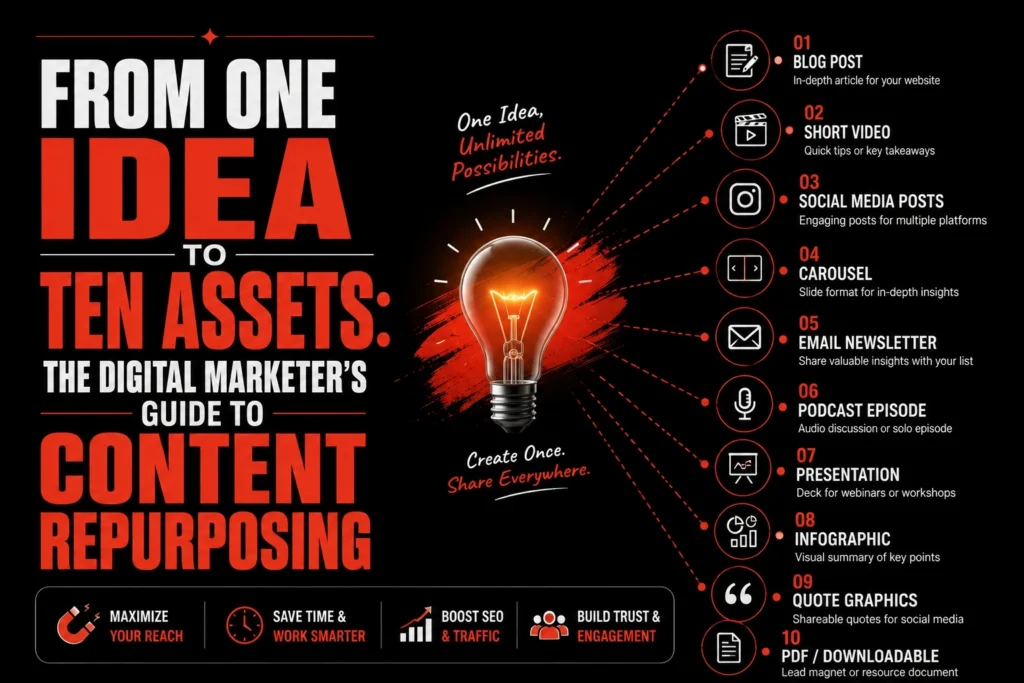
From One Idea to Ten Assets: The Digital Marketer’s Guide to Content Repurposing

Why One Piece of Content Can Do More Than You Think Creating valuable content consistently remains one of the biggest challenges for a digital marketer. Many professionals spend hours researching a topic, writing an article, recording a video, or creating an informative post. However, they often publish that content once and immediately move on to the next idea. As a result, they leave significant opportunities for additional reach, engagement, and traffic on the table. Content repurposing offers a smarter alternative. Instead of creating ten completely different ideas from scratch, you can transform one strong piece of content into multiple formats. Consequently, a single well-researched topic can support your social media strategy, SEO efforts, email marketing, video content, and personal brand for days or even weeks. Start With One Strong Content Asset The process begins with choosing a strong original piece of content. This could be a detailed blog post, YouTube video, podcast episode, webinar, case study, or research report. Ideally, the original content should contain useful information, practical examples, opinions, statistics, or actionable advice that you can divide into smaller ideas. For example, imagine that you create a comprehensive blog post titled “10 Common SEO Mistakes Small Businesses Make.” Instead of treating that article as a finished project, look at it as a content source. Each mistake can become an individual social media post, while the complete article can support a video, carousel, email, infographic, and short-form video series. Therefore, the original content becomes the foundation for an entire content ecosystem. Turn the Blog Into Social Media Gold First, transform the key points from your article into individual social media posts. You do not need to copy entire paragraphs. Instead, identify the strongest insights and rewrite them according to the platform and audience. A single idea from your article could become a LinkedIn post, Instagram caption, Facebook post, or X thread. Next, extract attention-grabbing statements, statistics, questions, and practical tips. These elements can generate several posts without making your audience feel that you are simply repeating yourself. Moreover, you can present the same concept from different perspectives. One post might explain the problem, another might provide a solution, and a third might share a personal observation or example. Transform Key Insights Into Short-Form Vid Short-form video provides another powerful opportunity for repurposing. Take the most useful sections of your original content and convert them into concise videos for platforms such as Instagram Reels, YouTube Shorts, or TikTok. Rather than attempting to explain the entire topic in one video, focus on one idea at a time. For instance, your SEO article could produce five short videos, with each video explaining one common mistake and its solution. Furthermore, you can create a strong opening hook for every video. A statement such as “Your website may be losing Google traffic because of this simple mistake” immediately creates curiosity. As a result, one written article can become an entire short-form video series. Build a Carousel From the Same Idea/Content Repurposing Strategy. A carousel can turn complex information into an easy-to-follow visual story. Begin with the main problem on the first slide, introduce the key points across the following slides, and finish with a practical conclusion or call to action. This format works particularly well when your original content contains lists, processes, comparisons, or step-by-step instructions. For example, the article about SEO mistakes could become a carousel titled “10 SEO Mistakes That Are Quietly Killing Your Website Traffic.” Each slide could highlight one mistake and provide a short solution. Consequently, the audience receives the same core knowledge in a faster and more visually engaging format. Give the Content a Second Life Through Email Email marketing provides another effective way to repurpose your content. Instead of sending your audience a simple link to the original article, extract one valuable lesson and turn it into an email. Then, provide enough context to make the email useful on its own while directing readers to the full resource for deeper information. You can also create a short email series from one long-form piece. For example, a ten-point article could become a five-day email sequence, with each email covering two related points. Additionally, you can use the original content as the foundation for a newsletter. This approach saves time while helping you maintain a consistent communication schedule with your subscribers. Convert Written Knowledge Into an Infographic Visual content can simplify information that might otherwise require several paragraphs to explain. Therefore, an infographic can transform statistics, processes, lists, and comparisons from your original content into a highly digestible format. Suppose your original article explains the stages of a successful digital marketing strategy. You could convert those stages into a visual roadmap showing research, content creation, SEO, social media, paid advertising, analytics, and optimization. This infographic can then appear on your website, social media platforms, presentations, or marketing materials. In addition, it can provide another opportunity to drive users back to the original article. Create a Video or Podcast From Your Expertise Long-form written content can also become the foundation for a video or podcast episode. Instead of writing a completely new script, use the original article as your outline. Expand the most interesting points with examples, personal observations, case studies, or explanations that work naturally in spoken form. For instance, a blog post about content marketing could become a fifteen-minute YouTube video titled “How I Would Build a Content Strategy From Zero.” The same discussion could then become a podcast episode. Moreover, you can extract short clips from the long-form video and use them as additional social media content. Thus, one article can generate several connected assets. Turn One Topic Into a Search-Friendly Content Cluster Repurposing should not only focus on social media. You can also use the original topic to identify additional search opportunities. Examine the main article and identify related questions your audience might search for on Google. Then, develop supporting content around those questions. For example, an article about SEO mistakes could lead to supporting topics such

Scroll to Top